

Description
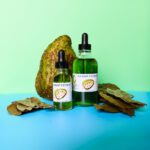
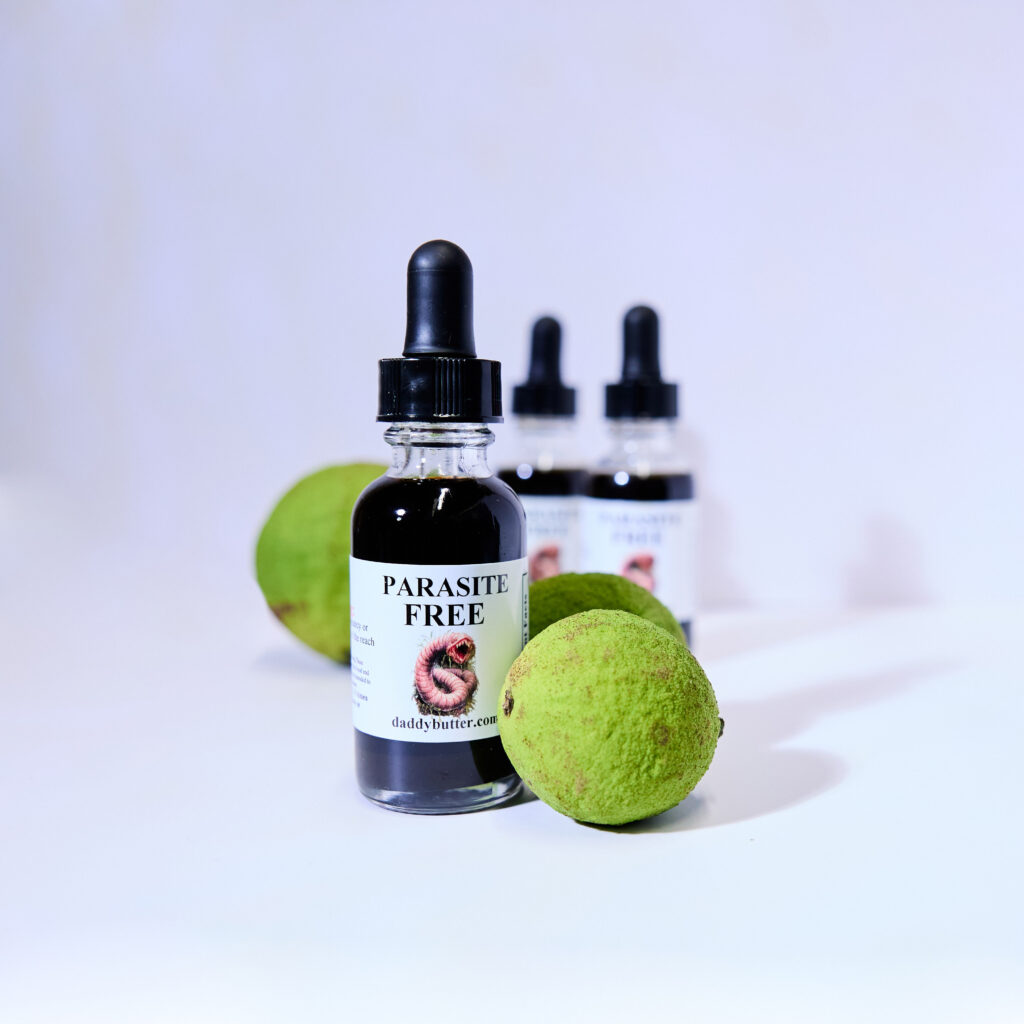
PARASITE FREE (Herbal Tincture)
Parasite Free is a bitter, warming botanical blend crafted to support your body’s natural “unwanted guest” defenses and promote a cleaner, more resilient gut environment. It features Quassia wood, Green Black Walnut Hull, Garrya (Silk Tassel), Clove Bud, and Bayberry Root Bark—plants with a long history in traditional herbalism for digestive support and “intestinal cleansing,” alongside modern lab research showing antimicrobial and antiparasitic potential from specific compounds.
Ingredient Spotlight: What each herb brings
1) Quassia Wood (Quassia spp.)
Quassia is one of the classic “bitter” botanicals. Bitters can stimulate digestive secretions and support overall digestion—which matters because a strong digestive environment is one of the body’s natural defenses. Quassia species also contain quassinoids, a class of compounds studied for antimicrobial activity in lab settings. PubMed+1
Why it matters in a parasite-style formula:
Bitters + certain bioactives may help make the gut a less hospitable environment for unwanted organisms while supporting digestion.
2) Green Black Walnut Hull (Juglans nigra hull)
Black walnut hull is traditionally used in “cleansing” protocols. Walnut species contain polyphenols/tannins and related compounds; one notable compound associated with walnut hull is juglone (a naphthoquinone). Modern reviews cover broad biological activity of walnut phytochemicals. PMC+1
Why it matters in a parasite-style formula:
Walnut hull is commonly included for its traditional use + the presence of bioactive compounds that are being actively studied.
3) Garrya (Silk Tassel) Herb (Garrya spp.)
Garrya (often called silk tassel) is used traditionally as a bitter/astringent botanical and is often discussed in herbal practice for digestive comfort (especially “tight/spasmy” feelings). Scientific research on Garrya is limited compared with the other ingredients, so its role here is best described as traditional digestive support rather than proven antiparasitic action.
Why it matters in a parasite-style formula:
Comfort + function: many people want intestinal calm and regularity while running a cleanse.
4) Clove Bud (Syzygium aromaticum)
Clove is the most research-supported “anti-unwanted-organism” herb in your lineup. Its major compound eugenol has been studied for antimicrobial and antiparasitic activity. For example, clove essential oil and eugenol showed in vitro anti-Giardia activity (lab study on Giardia). PubMed+1
Eugenol has also been studied for anthelmintic effects in experimental models. PMC
Why it matters in a parasite-style formula:
Clove contributes strong, well-characterized plant chemistry that researchers have tested against certain parasites in lab/experimental settings.
5) Bayberry Root Bark (Myrica/Morella cerifera)
Bayberry (wax myrtle) is traditionally used as an astringent herb (tannin-rich). A published study exploring Myrica cerifera reported antibacterial and nematicidal (anti-roundworm model) activity, aligning with why it’s often placed in “cleanse” formulas. PMC
A review of Morella cerifera also notes its traditional astringent use and broader bioactivity. PMC
Why it matters in a parasite-style formula:
Astringents can support mucosal tone and help “tighten up” the terrain, while the plant’s chemistry is being studied for antimicrobial effects.
How these herbs work together (the “stack”)
Think of Parasite Free as a multi-angle gut support formula:
-
Direct bioactive pressure (lab-supported):
Clove/eugenol has documented antiparasitic activity in vitro and experimental models. PubMed+1 -
Terrain + digestive signaling (traditional + plausible physiology):
Quassia + Garrya bring the bitter angle—often used to support digestion, which is part of the body’s natural defense and resilience. PubMed+1 -
Astringent “mucosal support” (traditional + phytochemistry):
Bayberry (and tannin-rich botanicals in general) are used traditionally to support gut lining tone; bayberry also has early research suggesting activity against microbes/nematodes. PMC+1
People often say blends like this feel “stronger” than single herbs: We’re combining digestive support + gut environment support + bioactive compounds rather than betting everything on one mechanism.
You MUST pair this with a binder (and why)
When people do antimicrobial/parasite-style protocols, they often report that the hardest part isn’t the protocol itself—it’s what happens after the body starts breaking things down and moving them out.
What a binder is (simple explanation)
A binder is something that stays primarily in the gut and can adsorb (stick to) certain compounds so they exit the body through stool instead of hanging around in the digestive tract.
-
Activated charcoal is used in medicine because it can adsorb a wide variety of substances in the GI tract and reduce absorption. NCBI+1
-
Certain clays (like bentonite / montmorillonite) have research showing binding of specific toxins (e.g., aflatoxins) in vitro and reductions in biomarkers/exposure in some settings. PubMed+1
Why “detoxing” without a binder can be a bad idea
Two big reasons:
-
If your gut isn’t moving well, you can feel worse.
Whether it’s microbial byproducts, bile-bound compounds, or general GI irritation, the goal is elimination. A binder is one tool people use to support that process (along with hydration, fiber, and regular bowel movements). -
Some compounds can be reabsorbed in the gut.
Medicine even uses “binding” strategies intentionally—example: cholestyramine binds bile acids in the intestinal lumen to increase fecal excretion (a known principle of gut-level sequestration). ScienceDirect+1
Critical safety note:
Binders can also bind medications and supplements and reduce absorption—activated charcoal is specifically known for reducing drug absorption (that’s literally why ERs use it). NCBI+1
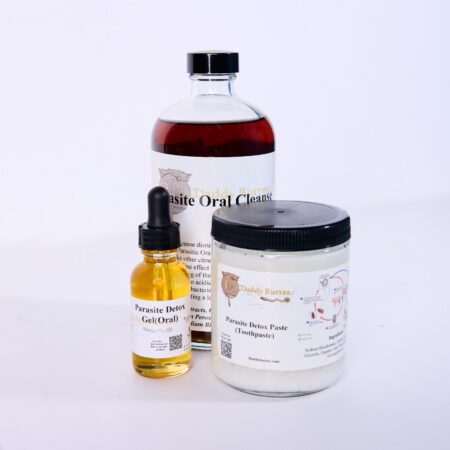
“We strongly recommend using a binder (like our Parasite Binder) to support comfortable elimination during a cleanse. Because binders may reduce absorption of medications and supplements, take them away from meds and consult a healthcare professional if you’re under medical care.”
Customer guidance (non-medical, practical)
-
Hydrate + keep bowels moving (fiber/food choices matter).
-
Use a binder if you’re doing a cleanse protocol.
-
Start low, assess tolerance, and avoid stacking multiple aggressive protocols at once.
-
If someone has severe symptoms, fever, blood in stool, pregnancy, or chronic illness: they should get medical guidance.
Safety flags (worth including)
-
Alcohol content: Not for children; caution for pregnancy, liver disease, or anyone avoiding alcohol.
-
Clove/eugenol: can be intense for sensitive stomachs; caution with anticoagulant meds.
-
Black walnut: avoid if you have tree nut allergies.
-
Quassia: animal research suggests potential reproductive hormone effects at certain exposures—best to avoid if pregnant/trying to conceive. PubMed
Research references:
-
Anti-Giardia activity of clove essential oil and eugenol (Exp Parasitol). PubMed
-
Review of clove (Syzygium aromaticum) bioactives and antiparasitic potential. PMC
-
Eugenol experimental anthelmintic activity (NIH/PMC). PMC
-
Quassia species bioactivity overview including antimicrobial/antimalarial research (PubMed). PubMed+1
-
Myrica cerifera (bayberry) antibacterial + nematicidal activity (PubMed Central). PMC
-
Activated charcoal medical mechanism (reduces GI absorption of many compounds). NCBI+1
-
Bentonite/montmorillonite binding research (aflatoxin sorption; review). PubMed+1



Reviews
There are no reviews yet.