



Description
📊 What Does the Latest Research Show?
Recent studies suggest that folinic acid may offer some benefits for specific symptoms in certain subgroups of children with ASD. It’s important to note that these are early-stage findings.
A 2025 randomized clinical trial involving 80 children with ASD found that those who received high-dose folinic acid (2 mg/kg per day, max 50 mg) for 12 weeks showed significantly greater improvements in social reciprocity (the back-and-forth of social interaction) compared to the control group . This study also highlighted the potential role of genetics, finding that children with certain variations in folate metabolism genes (like MTHFR A1298C or MTRR A66G) experienced greater benefits . This suggests that if folinic acid is effective, it may be most effective for a specific subset of individuals with these genetic profiles.
Other research supports this cautious optimism. One meta-analysis of two double-blind, placebo-controlled trials concluded that folinic acid administration has the potential to reduce ASD symptoms . Another small 2025 open-label pilot study found that while improvement in autism symptoms wasn’t statistically significant due to the small sample size, there were clinically meaningful changes and trends toward gains in communication scores .
Finally, a study published in 2024 (and noted as retracted in your search results) suggested that the benefits of folinic acid might be more pronounced in children with high titers of folate receptor autoantibodies, though the study’s retraction means its conclusions should be treated with significant caution .
🧑⚕️ Who Might It Help?
The research points to folinic acid potentially helping specific groups, rather than being a broad treatment for all children with autism. The main areas of investigation are:
Children with Folate Metabolism Abnormalities: This includes those with specific gene polymorphisms (like MTHFR) that affect how their bodies process folate .
Children with Cerebral Folate Deficiency (CFD): This is a rare neurological condition where folate levels are low in the brain despite being normal in the blood. Early, small studies first linked autism to CFD and showed that folinic acid could correct the deficiency and improve motor skills, though the impact on core autism symptoms was less clear .
Children with Folate Receptor Autoantibodies: As mentioned, some research (now retracted) suggested that children with these autoantibodies might respond better to treatment .
🩺 What is the Official Medical Guidance?
Despite the promising but preliminary research, the official stance from a leading medical authority is one of caution.
The American Academy of Pediatrics (AAP), in its interim guidance issued in late 2025, does not recommend the routine use of leucovorin (folinic acid) for autistic children . The AAP’s position is based on the fact that the current evidence is too limited to support specific clinical recommendations for the broader autistic population. Key questions remain unanswered, such as:
Which specific subgroups are most likely to benefit?
What are the appropriate dosing and monitoring strategies?
What is the long-term safety profile?
The AAP supports continued research but emphasizes that any new guidance must be grounded in scientific rigor . The Swedish Agency for Health Technology Assessment and Assessment of Social Services (SBU) also reviewed the evidence and, citing a high-quality systematic review from 2022, noted that while there were indications of improvement with folinic acid, the findings were “imprecise based on limited data and not formally statistically significant” .
💡 Summary and Key Takeaways
Here is a summary of the current landscape regarding folinic acid and autism:
Evidence is Preliminary: Recent studies show potential for improving specific symptoms like social reciprocity, but the research is still in early stages with small sample sizes.
It May Help a Subset of Children: The benefits are likely not universal but may be tied to specific genetic profiles (e.g., MTHFR mutations) or conditions like cerebral folate deficiency .
Official Guidance is Cautious: Major medical organizations like the AAP do not recommend routine use due to insufficient evidence on safety and efficacy for the general autistic population.
It is Not a “Reversal”: Current research investigates symptom improvement, not a “cure” or “reversal” of an autism diagnosis.
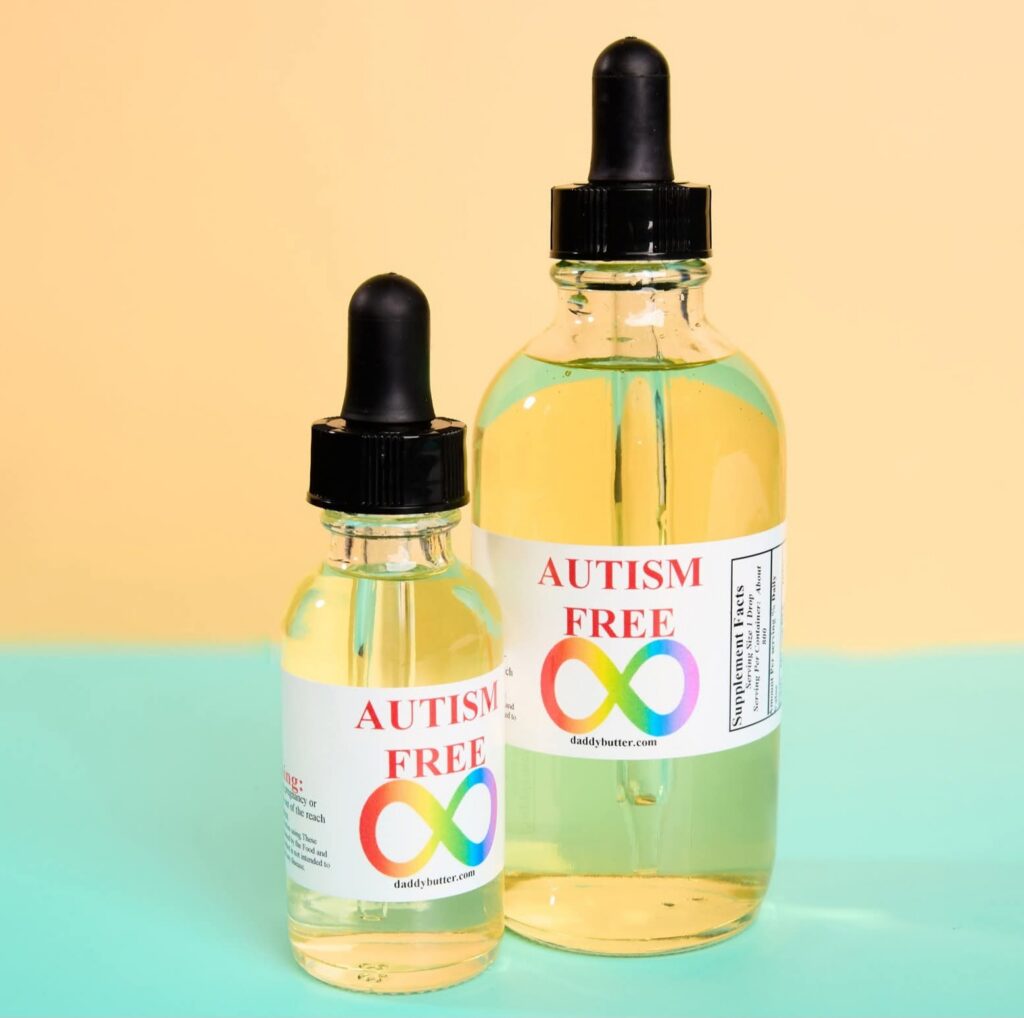
What Is Autism-Free™?
Autism-Free™ contains folinic acid (also known as leucovorin), a reduced form of folate (vitamin B9) that differs from standard folic acid in a critical way. Unlike folic acid, which requires activation by the enzyme dihydrofolate reductase (DHFR), folinic acid can be directly converted into the active folate forms your body needs . This makes it particularly valuable for individuals with certain genetic variations that affect folate metabolism.
The Science Behind Folinic Acid and Autism
Why Folate Matters in Autism
Research has identified that abnormalities in folate metabolism may play a significant role in autism for a subset of individuals. The folate cycle is essential for:
DNA methylation reactions critical for gene expression
Neurotransmitter synthesis affecting brain function
The glutathione oxidative stress pathway protecting against cellular damage
The Key Mechanism: Folate Transport to the Brain
The blood-brain barrier presents a unique challenge for folate delivery. Normally, folate enters the brain through the folate receptor alpha (FRα) . However, studies have found that many autistic individuals have folate receptor autoantibodies (FRAA) that block this receptor . In fact, seminal research found that approximately 75% of children with autism tested positive for at least one type of folate receptor autoantibody .
This is where folinic acid offers a distinct advantage. Folinic acid can enter the brain through an alternative pathway—the reduced folate carrier (RFC)—bypassing the blocked FRα receptors entirely . This mechanism may help restore adequate folate levels in the central nervous system for those with cerebral folate deficiency (CFD).
What the Research Shows: Evidence from Clinical Trials
Multiple randomized controlled trials have investigated folinic acid for autism-related symptoms. Below is a summary of key studies with direct links to the original research.
Summary of Key Clinical Trials
Study Participants Dosage Duration Key Findings Link to Study
Zhang et al. (2025) 80 children (3-6 years) 2 mg/kg/day (max 50 mg) 12 weeks Significant improvement in social reciprocity; greater benefits in children with MTHFR A1298C or MTRR A66G gene mutations; no significant adverse effects View Study
Frye et al. (2018) 48 children with autism and language impairment 2 mg/kg/day (max 50 mg) 12 weeks Improved verbal communication with medium-to-large effect size (Cohen’s d = 0.70); FRAA-positive children showed greater response (d = 0.91) View Study
Panda et al. (2024) ~80 children (2-10 years) 2 mg/kg/day (max 50 mg) 24 weeks Reduction in CARS scores (autism severity); improvements in Child Behavior Checklist; greater effect with high FRAA titers View Study
Renard et al. (EFFET, 2020) 19 children 5 mg twice daily 12 weeks Greater decrease in ADOS scores (social/communication) versus placebo View Study
Batebi et al. (2021) 55 children (4-12 years) 2 mg/kg/day (max 50 mg) 10 weeks Improved inappropriate speech and stereotypic behaviors on ABC-C scale View Study
Wong et al. (2025) 10 children (4-8 years) 2 mg/kg/day 12 weeks Clinically meaningful changes in PDDBI Autism Composite; trends toward gains in communication View Study
Meta-Analysis Confirms Potential
A 2021 systematic review and meta-analysis by Rossignol and Frye synthesized the available evidence on folinic acid in autism, concluding that treatment was associated with improvements in communication and core/associated symptoms in a considerable proportion of individuals . View Meta-Analysis
Who May Benefit Most from Autism-Free™?
The research suggests that folinic acid is not equally effective for everyone—it appears to offer the greatest benefit for specific subgroups:
1. Individuals with Folate Receptor Autoantibodies (FRAA)
Multiple studies have found that FRAA-positive individuals show greater treatment response . In the Frye et al. study, FRAA-positive children demonstrated a significantly larger effect size (d = 0.91) compared to the overall group .
2. Individuals with Specific Gene Polymorphisms
The most recent 2025 research by Zhang and colleagues found that children with:
MTHFR A1298C mutations
MTRR A66G mutations
…demonstrated greater improvements in various developmental domains than those without these genetic variations . Certain genotype combinations (such as MTHFR C677T and A1298C together) may also predict better response .
3. Individuals with Cerebral Folate Deficiency (CFD)
Early case studies documented significant improvements in children with confirmed CFD, including dramatic gains in motor function and some communication abilities . The FDA has recognized this connection, approving a label update for leucovorin in patients with CFD who also have autism symptoms .
Autism-Free™ for Adults: What We Know
While the majority of research has focused on children, there are several reasons to believe Autism-Free™ may benefit autistic adults as well:
Extending the Mechanism to Adults
The underlying biological mechanisms—folate receptor autoantibodies, genetic polymorphisms in folate metabolism genes, and potential cerebral folate deficiency—are not conditions limited to childhood. Adults with these same biological factors could theoretically benefit from folinic acid supplementation.
Limited but Relevant Evidence
The FDA’s September 2025 label update for leucovorin explicitly includes both children AND adults with cerebral folate deficiency . This regulatory recognition acknowledges that CFD persists across the lifespan.
Case reports cited in FDA documentation included adults with genetically confirmed CFD who responded to oral folinic acid . Additionally, the folate receptor autoantibodies that predict treatment response in children are also found in autistic adults .
Why Adults May Benefit
Lifelong metabolic pathways: Folate metabolism abnormalities don’t resolve with age
Continued need for neurotransmitter support: Folate remains essential for neurotransmitter synthesis throughout life
Adaptive potential: Adults may experience improvements in communication, cognitive function, and quality of life
A Call for Adult Research
We acknowledge that dedicated clinical trials in autistic adults are urgently needed. The existing evidence in children provides a strong scientific rationale, but adult-specific research will help optimize dosing and confirm benefits for this population.
Safety and Tolerability
Across all published studies, folinic acid has demonstrated an excellent safety profile:
No serious adverse events reported in any randomized controlled trial
Adverse effects when reported were mild and transient: occasional agitation, insomnia, headache, or gastrointestinal symptoms
Tolerability similar to placebo in controlled studies
The Zhang 2025 study specifically monitored adverse effects using the Treatment Emergent Symptom Scale and found no significant adverse effects during the 12-week intervention .
How to Use Autism-Free™
Dosing Based on Clinical Research
The most commonly studied and effective dosage in clinical trials is:
2 mg per kilogram of body weight per day
Maximum 50 mg per day
Divided into two doses (morning and evening)
Duration
Clinical trials have demonstrated benefits over:
12 weeks (short-term studies)
24 weeks (longer-term studies showing sustained benefits)
Important Medical Guidance
We believe in full transparency about the current medical consensus:
The American Academy of Pediatrics (AAP) , in its October 2025 interim guidance, does not recommend routine use of leucovorin for all autistic children . Their position is based on the need for larger, well-controlled trials before broad recommendations can be made.
However, the AAP also acknowledges that preliminary results are promising and supports continued research. They encourage shared decision-making between families and healthcare providers .
The AAP states: “Early, small-scale studies have explored its use—particularly among children with documented cerebral folate deficiency—and some findings suggest potential benefit in carefully selected cases. These preliminary results are promising and have laid the groundwork for further investigation.”
Why We Believe Autism-Free™ Represents a Major Advancement
1. Targeting a Specific Biological Mechanism
Unlike approaches that attempt to address autism through broad, untargeted interventions, folinic acid targets a specific, measurable biological pathway: folate transport to the brain in individuals with folate receptor antibodies or genetic polymorphisms .
2. Strong Scientific Foundation
With multiple randomized controlled trials, a positive meta-analysis, and consistent findings across different research groups worldwide, the evidence base for folinic acid is stronger than for most nutritional interventions in autism .
3. Personalized Medicine Approach
The research increasingly points to identifying who will benefit through biomarker testing (FRAA) or genetic analysis (MTHFR, MTRR). This moves autism care toward precision medicine rather than one-size-fits-all approaches .
4. Favorable Safety Profile
With no serious adverse events reported across multiple studies and excellent tolerability, the risk-benefit ratio appears favorable for those in the likely responder subgroups .
5. FDA Recognition
The FDA’s 2025 label update for leucovorin in cerebral folate deficiency with autism symptoms represents a significant regulatory milestone, acknowledging the potential of this approach .
Frequently Asked Questions
Does Autism-Free™ cure autism?
No. Autism is a neurodevelopmental condition, not a disease to be “cured.” Our product targets specific metabolic pathways that may help alleviate certain symptoms in some individuals, potentially improving quality of life.
How is folinic acid different from folic acid?
Folic acid requires enzymatic activation and uses the FRα receptor to enter the brain. Folinic acid is already activated and can use alternative pathways when FRα is blocked by autoantibodies.
Do I need testing before using Autism-Free™?
While some clinicians conduct therapeutic trials without testing, the likelihood of response appears higher in individuals with positive FRAA or specific gene polymorphisms. Testing can help guide the decision.
How long before I might see effects?
Clinical trials have measured improvements at 12 weeks, with some studies showing continued benefits at 24 weeks. Individual responses vary.
Is Autism-Free™ safe with other medications?
Always consult your healthcare provider. Studies have included children on stable antipsychotic regimens without significant interaction concerns, but individual medical supervision is essential.
Commitment to Transparency
We are committed to providing accurate, evidence-based information. Our product description is grounded in peer-reviewed research, and we encourage you to review the linked studies and discuss this information with your healthcare provider.
Autism-Free™ is not intended to diagnose, treat, cure, or prevent any disease. The FDA has not evaluated these statements. Individual results may vary.






Reviews
There are no reviews yet.